Earlier this week IAAPA, through the H-2B Workforce Coalition, submitted a letter to the U.S. Department of Labor (DOL) on an H-2B rulemaking. The letter can be viewed in the GR Archive section of the IAAPA website.
The rulemaking concerned the implementation of a recent controversial rule on wage methodology for H-2B workers. In its letter, the Coalition requested that DOL rescind the rule as a means of complying with President Obama’s Jan. 18 presidential memorandum that expressed the administration’s commitment to eliminating excessive and unjustified regulatory burdens on small businesses.
As members of the attractions industry know, during busy seasons companies must supplement their full-time staff with temporary seasonal workers. Unfortunately, even in today’s tough economic climate there are sometimes not enough local workers available to fill all the temporary seasonal positions. As a result, the attractions industry sometimes uses the H-2B program to find seasonal workers.
Now that the comment period has ended, the Administrative Procedure Act dictates that the Department of Labor will consider the comments it received, and produce a final rule that takes those comments into account. However, for political reasons, it is highly unlikely the DOL will heed our suggestion and rescind the rule.
Thursday, March 24, 2011


Friday, March 18, 2011
First IAAPA Leadership Conference Wraps in Spectacular Fashion
It's safe to say the 2011 IAAPA Leadership Conference was a big hit.
I've just returned to my room here in San Diego after a long, exhausting, GLORIOUS day visiting three wonderful SoCal parks, culminating with a viewing of Disney California Adventure's "World of Color" as a fitting exclamation point to a fantastic week.
Today was filled with behind-the-scenes access as we traveled up I-5. At Legoland California we got to see the surefire soon-to-be hit Star Wars Miniland in construction; Knott's Berry Farm gave us a look at its operations in food & beverage, entertainment, and maintenance; and Disney took us where almost no outsiders have gone before: behind and below the screen of "Soarin'" and out onto a balcony of "The Twilight Zone Tower of Terror" for a spectacular view of the construction going on at Cars Land.
I'll have much more to come in the May issue of Funworld—including some great photos from the entire week of activity—but right now I have to start packing so I can get to the airport in, oh, five hours. But before things wrapped tonight I spoke with several IAAPA officers as well as other attendees, and everyone is already looking forward to doing this again next year.
For the many I met this week, thanks for spending time letting me get to know you. And for those who didn't make it this year, I hope I'll get to meet you at an IAAPA Leadership Conference in the future. This certainly was an event I will never forget.
I've just returned to my room here in San Diego after a long, exhausting, GLORIOUS day visiting three wonderful SoCal parks, culminating with a viewing of Disney California Adventure's "World of Color" as a fitting exclamation point to a fantastic week.
Today was filled with behind-the-scenes access as we traveled up I-5. At Legoland California we got to see the surefire soon-to-be hit Star Wars Miniland in construction; Knott's Berry Farm gave us a look at its operations in food & beverage, entertainment, and maintenance; and Disney took us where almost no outsiders have gone before: behind and below the screen of "Soarin'" and out onto a balcony of "The Twilight Zone Tower of Terror" for a spectacular view of the construction going on at Cars Land.
I'll have much more to come in the May issue of Funworld—including some great photos from the entire week of activity—but right now I have to start packing so I can get to the airport in, oh, five hours. But before things wrapped tonight I spoke with several IAAPA officers as well as other attendees, and everyone is already looking forward to doing this again next year.
For the many I met this week, thanks for spending time letting me get to know you. And for those who didn't make it this year, I hope I'll get to meet you at an IAAPA Leadership Conference in the future. This certainly was an event I will never forget.
Thursday, March 17, 2011
ADA Primer Now Available
The new ADA rules for public accommodations went into effect on Tuesday (March 15, 2011). This means businesses now must comply with the ADA's general nondiscrimination requirements, including provisions related to policies and procedures and effective communication. The deadline for complying with the 2010 standards, which detail the technical rules for building accessibility, is next year (March 15, 2012).
The U.S. Department of Justice recently published a free guide, ADA Update: A Primer for Small Business, to assist in navigating the recently updated rules for public accommodations. The title suggests the guide is only for small businesses, but after reading through it, I think the information presented can be useful to any business.
The primer addresses (in relatively plain English) both the requirements that are effective now, such as service animals and mobility devices, and the 2010 standard, but it does not address rules unique to the attractions industry such as those on miniature golf courses, amusement rides, and pools. In order to provide our members with more information on the regulations for those facilities, we are preparing a series of white papers that will assist members in developing their compliance strategies. In the next few weeks, look for more information from IAAPA on the new ADA rules. And, if you are in New England and have questions about the ADA, I'll be giving a presentation with IAAPA FEC Committee Chairman Tim Sorge at the NEAAPA Annual Meeting, March 29-30, in Providence, Rhode Island.
The U.S. Department of Justice recently published a free guide, ADA Update: A Primer for Small Business, to assist in navigating the recently updated rules for public accommodations. The title suggests the guide is only for small businesses, but after reading through it, I think the information presented can be useful to any business.
The primer addresses (in relatively plain English) both the requirements that are effective now, such as service animals and mobility devices, and the 2010 standard, but it does not address rules unique to the attractions industry such as those on miniature golf courses, amusement rides, and pools. In order to provide our members with more information on the regulations for those facilities, we are preparing a series of white papers that will assist members in developing their compliance strategies. In the next few weeks, look for more information from IAAPA on the new ADA rules. And, if you are in New England and have questions about the ADA, I'll be giving a presentation with IAAPA FEC Committee Chairman Tim Sorge at the NEAAPA Annual Meeting, March 29-30, in Providence, Rhode Island.
Wednesday, March 16, 2011
Inaugural IAAPA Leadership Conference Debuted Today
Day 1 of the new IAAPA Leadership Conference is in the books. Today attendees got a real flavor for what an industry hotbed San Diego is with visits to three vastly different facilities: Boomers!, a family entertainment center; Belmont Park, which offers the feel of a traditional seaside park; and SeaWorld San Diego, a big theme park experience. Here are a few pics from the day (photos by Robert Benson):


I don't appear in any of those photos because I wasn't there. Instead, I spent my day split between two committee meetings: Zoos & Aquariums, and Museums & Science Centers. I was so impressed with the intensity these groups brought to their respective tasks and to plan their dedicated education days at IAAPA Attractions Expo 2011 this November in Orlando. I can't divulge any specifics of what they have planned since it all has to be finalized, but I can tell you both groups have big plans to make their own tracks special—must-do experiences for their attraction communities.
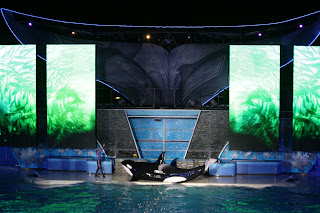
Tonight I joined several of those same committee members along with the rest of the conference attendees for an exclusive dinner at SeaWorld San Diego (my first trip to this park). After reconnecting with some old friends and meeting some new ones—and a trip through the "Wild Arctic" attraction (uh, yeah, that walrus is so huge it boggles the mind!)—we all settled into Shamu Stadium for an after-hours showing of "Shamu Rocks!," the park's nighttime whale show. The big guys were kind to us and didn't splash our group in the chilly weather. Doesn't he look cool under the lights?


I don't appear in any of those photos because I wasn't there. Instead, I spent my day split between two committee meetings: Zoos & Aquariums, and Museums & Science Centers. I was so impressed with the intensity these groups brought to their respective tasks and to plan their dedicated education days at IAAPA Attractions Expo 2011 this November in Orlando. I can't divulge any specifics of what they have planned since it all has to be finalized, but I can tell you both groups have big plans to make their own tracks special—must-do experiences for their attraction communities.
Tonight I joined several of those same committee members along with the rest of the conference attendees for an exclusive dinner at SeaWorld San Diego (my first trip to this park). After reconnecting with some old friends and meeting some new ones—and a trip through the "Wild Arctic" attraction (uh, yeah, that walrus is so huge it boggles the mind!)—we all settled into Shamu Stadium for an after-hours showing of "Shamu Rocks!," the park's nighttime whale show. The big guys were kind to us and didn't splash our group in the chilly weather. Doesn't he look cool under the lights?

Tuesday, March 15, 2011
IAAPA Committees Gather in San Diego Ahead of Leadership Conference
The first IAAPA Leadership Conference officially gets under way Tuesday here in San Diego, but there was quite a bit of work and activity happening already.
Today seven IAAPA committees held their annual face-to-face meetings, many of them focused on this year's education planning for IAAPA Attractions Expo 2011 this November in Orlando. I sat in on three different meetings throughout the day: Amusement Parks & Attractions, Waterparks, and Communications.
It was a pleasure for me to be a "fly on the wall" (although I couldn't keep my mouth shut entirely!) listening in on the conversations among these experts about trends and challenges they're facing back at their parks and attractions, and how they want to address these issues during Expo. Whether it's social media, government relations/compliance, or discussion of the latest technology, I'm looking forward to researching these topics further in the pages of Funworld, as well.
I was also impressed with the dedication of these volunteers, some of whom flew halfway around the world to sit in on these meetings and share their expertise and experience. In one day alone, I met with industry folks from Hong Kong, the Philippines, Germany, the UK, the Netherlands, and elsewhere. The committees had packed agendas and the discussion was enlightening.
And this is just the preview. Starting tomorrow the IAAPA Leadership Conference officially starts with tours to Boomers!, Belmont Park, and SeaWorld San Diego. The goal for this new association event is to give attendees behind-the-scenes access to exemplary attractions, as well as numerous networking opportunities with colleagues; with those two components in place, essentially the learning never stops. Later this week we'll be visiting Knott's Berry Farm, Legoland, and Disneyland, among others.
I'll be in more committee meetings tomorrow, but the Leadership Conference runs through Thursday so I'll have further details later this week and then a full report in the May issue of Funworld.
Today seven IAAPA committees held their annual face-to-face meetings, many of them focused on this year's education planning for IAAPA Attractions Expo 2011 this November in Orlando. I sat in on three different meetings throughout the day: Amusement Parks & Attractions, Waterparks, and Communications.
It was a pleasure for me to be a "fly on the wall" (although I couldn't keep my mouth shut entirely!) listening in on the conversations among these experts about trends and challenges they're facing back at their parks and attractions, and how they want to address these issues during Expo. Whether it's social media, government relations/compliance, or discussion of the latest technology, I'm looking forward to researching these topics further in the pages of Funworld, as well.
I was also impressed with the dedication of these volunteers, some of whom flew halfway around the world to sit in on these meetings and share their expertise and experience. In one day alone, I met with industry folks from Hong Kong, the Philippines, Germany, the UK, the Netherlands, and elsewhere. The committees had packed agendas and the discussion was enlightening.
And this is just the preview. Starting tomorrow the IAAPA Leadership Conference officially starts with tours to Boomers!, Belmont Park, and SeaWorld San Diego. The goal for this new association event is to give attendees behind-the-scenes access to exemplary attractions, as well as numerous networking opportunities with colleagues; with those two components in place, essentially the learning never stops. Later this week we'll be visiting Knott's Berry Farm, Legoland, and Disneyland, among others.
I'll be in more committee meetings tomorrow, but the Leadership Conference runs through Thursday so I'll have further details later this week and then a full report in the May issue of Funworld.
Wednesday, March 9, 2011
CPSIA Database Launches Friday
If you manufacture, import, or even put your logo on a children's product in the U.S., and you have not already registered your company with the new CPSIA database, stop reading this blog and do it now!
A controversial part of the Consumer Product Safety Improvements Act was the Publicly Available Consumer Product Safety Information Database, where individuals can post safety complaints about consumer products. Manufacturers who register with the database will be given 10 days' notice to respond to these complaints before they are posted on the Internet. If a manufacturer is not registered, the complaints will still be posted in 10 days. It's important to remember that the CPSIA expanded the definition of "manufacturer" far beyond the colloquial usage. Importers, retailers, and private labelers can now be held liable if the product does not comply with the CPSIA.
IAAPA has many issues with the final rule regarding the public database. As we said in our comment letter, we disagree with the expansion of the provisions explaining who may file and what information will be published online. We are also concerned about how the CPSC will handle situations where both a manufacturer and a private labeler are identified. The manufacturing community as a whole is concerned with the potential for abuse and fraud.
Last month, freshman Congressman Mike Pompeo (R-KS), introduced an amendment to the budget Continuing Resolution (H.R. 1) that defunded the CPSIA database until certain issues were addressed, but ultimately the Senate voted down the bill, so the database is set to launch later this week.
IAAPA members can register to be notified of a product complaint at SaferProducts.gov.
A controversial part of the Consumer Product Safety Improvements Act was the Publicly Available Consumer Product Safety Information Database, where individuals can post safety complaints about consumer products. Manufacturers who register with the database will be given 10 days' notice to respond to these complaints before they are posted on the Internet. If a manufacturer is not registered, the complaints will still be posted in 10 days. It's important to remember that the CPSIA expanded the definition of "manufacturer" far beyond the colloquial usage. Importers, retailers, and private labelers can now be held liable if the product does not comply with the CPSIA.
IAAPA has many issues with the final rule regarding the public database. As we said in our comment letter, we disagree with the expansion of the provisions explaining who may file and what information will be published online. We are also concerned about how the CPSC will handle situations where both a manufacturer and a private labeler are identified. The manufacturing community as a whole is concerned with the potential for abuse and fraud.
Last month, freshman Congressman Mike Pompeo (R-KS), introduced an amendment to the budget Continuing Resolution (H.R. 1) that defunded the CPSIA database until certain issues were addressed, but ultimately the Senate voted down the bill, so the database is set to launch later this week.
IAAPA members can register to be notified of a product complaint at SaferProducts.gov.
Friday, March 4, 2011
Do State Budget Shortfalls Mean Trouble for the Attractions Industry?
I’ve been on the road a lot lately, visiting associations for state and regional attractions. Two weeks ago, I was in Austin, Texas, to participate in the Texas Travel Industry Association's Unity Dinner and give a presentation on federal health care reform to TTIA members. Earlier this week, I attended the Pennsylvania Amusement Park Association’s Spring Meeting in Hershey, Pennsylvania. Later this month I will be in Providence, Rhode Island, at the New England Association of Amusement Parks and Attractions’ Annual Meeting.
Some years state-by-state issues vary greatly, but right now I hear similar themes in every region I visit: the recent economic troubles have left many states with budget shortfalls. Decreased property values and business revenues, coupled with unemployment means states are not getting the tax revenue they are used to. Some states relied on one-time stimulus payments to fund ongoing expenses. One of the things I learned in Texas is that with the appropriations currently in place (meaning no new spending, and no inflation adjustments), the state is facing a $4.3 billion shortfall.
Just like a business does when revenues are less than expenses, state governments are looking at ways to cut spending and/or raise revenue. How they go about this is something members of the attractions industry should pay close attention to.
Most states have agencies dedicated to promoting travel to the state. These agencies are funded in different ways, but in most of the agencies I am familiar with it's through taxes on hotels, rental cars, and other travel expenses. In Texas, 1/12th of the revenues generated by the state's hotel occupancy tax are dedicated to state travel promotion.
Travel promotion is a great return on investment for states: promoting travel to a state is like free advertising for the attractions within the state. The attractions get more visitors, who generate revenue from sales, hotel stays, admissions, and other taxes, which is money for the state and its residents.
Unfortunately, when there’s a budget shortfall everything’s on the table, including state tourism promotion in some states. While I am generally in favor of reduced government spending, cutting state travel promotion actually costs the state money: In a year after defunding its state tourism promotion program, Colorado lost tax revenues that totaled 11 times the amount of tourism promotion funding the legislature cut. Years later, Colorado is still fighting to regain its footing in the tourism market.
If your state tourism bureau is facing budget cuts, speak up! Call your state representative and senator—or, better yet, set up a meeting with them. Don’t know your state elected officials? Look them up on IAAPA’s website. Tell your elected officials not to cut funding for the state tourism office. Explain how it’s a great return on investment, and remind them of the Colorado mistake. For more talking points, or if you need help, contact me.
Some years state-by-state issues vary greatly, but right now I hear similar themes in every region I visit: the recent economic troubles have left many states with budget shortfalls. Decreased property values and business revenues, coupled with unemployment means states are not getting the tax revenue they are used to. Some states relied on one-time stimulus payments to fund ongoing expenses. One of the things I learned in Texas is that with the appropriations currently in place (meaning no new spending, and no inflation adjustments), the state is facing a $4.3 billion shortfall.
Just like a business does when revenues are less than expenses, state governments are looking at ways to cut spending and/or raise revenue. How they go about this is something members of the attractions industry should pay close attention to.
Most states have agencies dedicated to promoting travel to the state. These agencies are funded in different ways, but in most of the agencies I am familiar with it's through taxes on hotels, rental cars, and other travel expenses. In Texas, 1/12th of the revenues generated by the state's hotel occupancy tax are dedicated to state travel promotion.
Travel promotion is a great return on investment for states: promoting travel to a state is like free advertising for the attractions within the state. The attractions get more visitors, who generate revenue from sales, hotel stays, admissions, and other taxes, which is money for the state and its residents.
Unfortunately, when there’s a budget shortfall everything’s on the table, including state tourism promotion in some states. While I am generally in favor of reduced government spending, cutting state travel promotion actually costs the state money: In a year after defunding its state tourism promotion program, Colorado lost tax revenues that totaled 11 times the amount of tourism promotion funding the legislature cut. Years later, Colorado is still fighting to regain its footing in the tourism market.
If your state tourism bureau is facing budget cuts, speak up! Call your state representative and senator—or, better yet, set up a meeting with them. Don’t know your state elected officials? Look them up on IAAPA’s website. Tell your elected officials not to cut funding for the state tourism office. Explain how it’s a great return on investment, and remind them of the Colorado mistake. For more talking points, or if you need help, contact me.
Subscribe to:
Posts (Atom)


 Posts
Posts


